How to Hire an AI Automation Agency in the USA: A 2026 Procurement Guide for Operations Leaders

Why Hiring a US AI Automation Agency Got Harder in 2026
Two years ago the choice was simple: there were maybe a dozen serious US AI automation agencies, and you picked the one with the strongest portfolio in your category. In 2026 the supply has exploded — every generalist development agency, every former marketing automation consultancy, and every solo prompt engineer with a Calendly link now markets as an AI automation agency. The portfolios look similar. The pitch decks look similar. The actual ability to ship a reliable agentic workflow that runs in production for 12 months without breaking? Highly variable.
This guide is the procurement framework we wish more US operations and RevOps leaders used. It's built around the questions that surface real production capability — the kind that matters when an agent that misbehaves at 3am could cost your business a customer, a compliance violation, or worse.
Step 1: Get Specific About the Engagement Type
"AI automation" is a category, not an engagement. Three different agency profiles serve three very different engagement types — and procurement starts with naming the one you actually need.
- Strategy / roadmapping engagement. You don't yet know which processes to automate. You need a 4–6 week strategy engagement that maps your processes, identifies high-ROI automation opportunities, and produces a prioritized roadmap. Budget: $20K–$60K. The agency you want here is process-literate and tool-agnostic.
- Build engagement. You know what to automate. You need an agency to build 1–10 specific automations or agentic workflows. Budget: $30K–$300K depending on complexity. The agency you want here ships production-grade systems, not demos.
- Embedded partner / retainer. You want an agency to be your AI automation function — continuously identifying opportunities, building, and operating automations. Budget: $15K–$50K/month. The agency you want here has bench depth and can operate inside your tooling.
The biggest procurement mistake operations leaders make is hiring a strategy-shaped agency to do a build engagement, or vice versa. Different muscles, often different teams.
Step 2: The 11 Questions That Reveal Production Capability
The agency sales call usually covers process, tools, and case studies. What it almost never reveals is whether the agency can operate AI automations in production for 12+ months without the wheels falling off. These questions surface that.
On production reliability
- "Walk me through how you monitor an AI agent in production." Real production agencies have observability stories — token usage tracking, error rate dashboards, drift detection, human-review queues. Agencies that pitch agents but haven't operated them give vague answers about "logs."
- "What's the longest an agent you built has been running continuously in production?" A specific number with details. "Over a year, processing X requests per day" beats "We have several agents in production."
- "Describe a time an agent misbehaved in production. What happened and what did you do?" Operations matters. Agencies with production scars can name them. Agencies that haven't shipped to production can't.
On architecture and judgment
- "When would you NOT recommend an agentic approach, and recommend deterministic workflow automation instead?" Agencies with judgment know agentic AI isn't always the answer. Agencies optimizing for billings push every workflow toward LLM-heavy solutions. The right answer involves rule-based workflows for high-volume deterministic processes, agentic only where genuine reasoning is needed.
- "What's your approach to human-in-the-loop design?" Production-grade automation almost always includes human escalation paths. Strong agencies have opinions on when to escalate, how to package context for the human reviewer, and how to feed the human decision back into the agent.
- "How do you handle prompt drift and model version changes?" When OpenAI / Anthropic / Google release a new model, what's the agency's playbook? Agencies that have actually operated production agents have a regression-testing answer here. Agencies that haven't, shrug.
On integration depth
- "Show me an integration architecture diagram from a recent project." AI automation in 2026 is mostly integration work. The agencies that ship reliable workflows have detailed integration architecture. Agencies that struggle in production usually have hand-wavy integration stories.
- "How do you handle integration failures — when the source API is down, returns unexpected data, or rate-limits you?" The answer reveals engineering maturity. "We have retry logic" is the floor. "We have dead-letter queues, exponential backoff, alerting thresholds, and reconciliation workflows" is production-grade.
On security and compliance
- "Where will my data flow when this agent runs?" Agentic workflows often involve multiple LLM calls, web searches, and third-party tool calls. Each one is a data flow. A production-ready agency can diagram every data exit point. A shaky agency hand-waves.
- "What's your stance on SOC 2, HIPAA, and data residency?" If your enterprise customers will eventually ask, your automation partner needs answers. Agencies that have shipped to regulated US industries (healthcare, financial services, government) have answers ready. Agencies that have only worked with seed-stage startups often don't.
On accountability
- "What happens if the automation we build saves less than you projected? How do we handle that?" Strong AI automation agencies model ROI explicitly in the SOW and have accountability for outcomes. Weak agencies define success as deliverables shipped. More on automation ROI here.
Step 3: The Three Artifacts to Request Before Signing
- A redacted SOW from a comparable engagement. Look at scope definition, change control, success metrics, and IP ownership. AI automation SOWs that don't include rollback procedures, model version pinning, or escalation runbooks predict fragile delivery.
- A sample monitoring dashboard from a production agent. The presence (or absence) of token tracking, accuracy metrics, latency monitoring, and human-review queue depth tells you whether the agency operates production AI or only builds demos.
- A post-launch operations runbook. What happens at 3am when the agent fails? A real runbook lists alerting thresholds, escalation paths, on-call rotation, and recovery procedures. No runbook means there's no plan when things break.
Step 4: Pricing Models in the US AI Automation Agency Market
- Fixed-scope, fixed-fee per workflow. Best for well-defined automations with clear scope ($15K–$80K per workflow). Risk: scope creep on edge cases.
- Discovery + phased build. Typical for strategy-led engagements. Pay $20K–$40K for a discovery sprint with prioritized roadmap, then continue with build phases scoped from the discovery output. Lowest risk for buyers.
- Outcomes-based / shared savings. The agency takes a base fee plus a share of measured savings (hours saved × loaded cost, or revenue lift attributable to automation). Increasingly common with mature US AI automation agencies. Aligns incentives but requires careful attribution methodology.
- Dedicated team retainer. Monthly engagement for continuous automation development. Typical $15K–$50K/month depending on team size and seniority. Works when the automation backlog is clearly longer than 6 months.
Be cautious of agencies that price purely on hours without scoping the outcome — AI automation projects have wide-variance hours and hourly billing without scope discipline is how budgets explode.
Step 5: The Reference Call Questions That Matter
Most reference conversations skip the questions that matter. Ask the reference these instead:
- "What's the most recent failure mode you've seen on this automation, and how did the agency handle it?"
- "How much of your internal team's time does it take to keep this automation running?"
- "What did you wish you'd known before starting this engagement?"
- "How does the agency behave when the news is bad?"
The way an AI automation agency handles its worst moments tells you more about whether to hire them than how they handle their best.
Common Procurement Mistakes US Operations Leaders Make
- Buying on demo, not production. Every agency can build an impressive demo. Production reliability is the hard part.
- Underweighting integration complexity. The AI is usually 20% of the work. Integration with your existing stack is 80%.
- Ignoring the team's actual seniority. Many US AI automation agencies pitch with senior consultants and deliver with junior implementers. Get specific names.
- Treating LLMs as deterministic systems. They're probabilistic. Workflows need to be designed for the failure mode where the model gets it wrong 2% of the time.
- Not budgeting for operations. The build is 60% of the lifetime cost. Operations, monitoring, and continuous improvement are the other 40%.
- Buying agentic when deterministic would work. If the logic can be expressed as rules, rules are cheaper, faster, and more reliable than LLM calls. The right agency tells you this.
What a Good US AI Automation Engagement Looks Like in 2026
The best engagements with a US AI automation agency share a common shape:
- Week 1–2: Discovery. Process mapping, opportunity identification, ROI modeling. Output: a ranked initiative list and recommended build sequence.
- Week 3: Architecture and scoping. Detailed design of the first 1–3 automations, including data flow, integration architecture, escalation paths, and observability. Output: SOW with milestones and acceptance criteria.
- Week 4–8: Build phase 1. First automation built in a sandbox with edge-case testing on real data. Demo cadence every 2 weeks. Output: working automation ready for staged rollout.
- Week 9–10: Staged production deployment. Limited rollout to a subset of cases with full monitoring. Tune accuracy thresholds and escalation rules based on real-world behavior.
- Week 11–12: Full production and handover. Documentation, training, monitoring dashboard handoff, and runbook delivery.
- Ongoing: Operations and iteration. Either retained by the agency or handed to your team. Reviewing accuracy metrics, refining prompts, expanding scope.
When a US AI Automation Agency Isn't the Right Move
Be honest about whether your situation calls for an agency at all.
- If your processes aren't documented or stable, automating them first will lock in chaos. Fix the process before automating it.
- If you have a strong in-house data / engineering team, they may build better automations than an external agency — your investment is in training, not procurement.
- If your automation needs are small and well-defined, an off-the-shelf platform (Zapier, Make, n8n) configured by an in-house ops generalist may be enough.
- If your team will resist the automation, no agency can compensate for a missing change-management plan.
The case for hiring a US AI automation agency is strongest when the workflows involve real reasoning (not just rules), when failure has business cost (a misclassified ticket, a wrong invoice posting), and when your team has the operations capacity to actually adopt and maintain what gets built.
How We Approach US AI Automation Engagements
We operate as a US AI automation agency with a Manhattan footprint. Every engagement starts with a discovery sprint that surfaces the highest-ROI initiatives before you commit to a build, and our SOWs include observability and runbook delivery by default — not as add-ons after launch. Book a free 45-minute scoping call and we'll walk through your situation, name the engagement type that fits, and tell you honestly whether we're the right match — or which type of US AI automation agency would be a better fit.
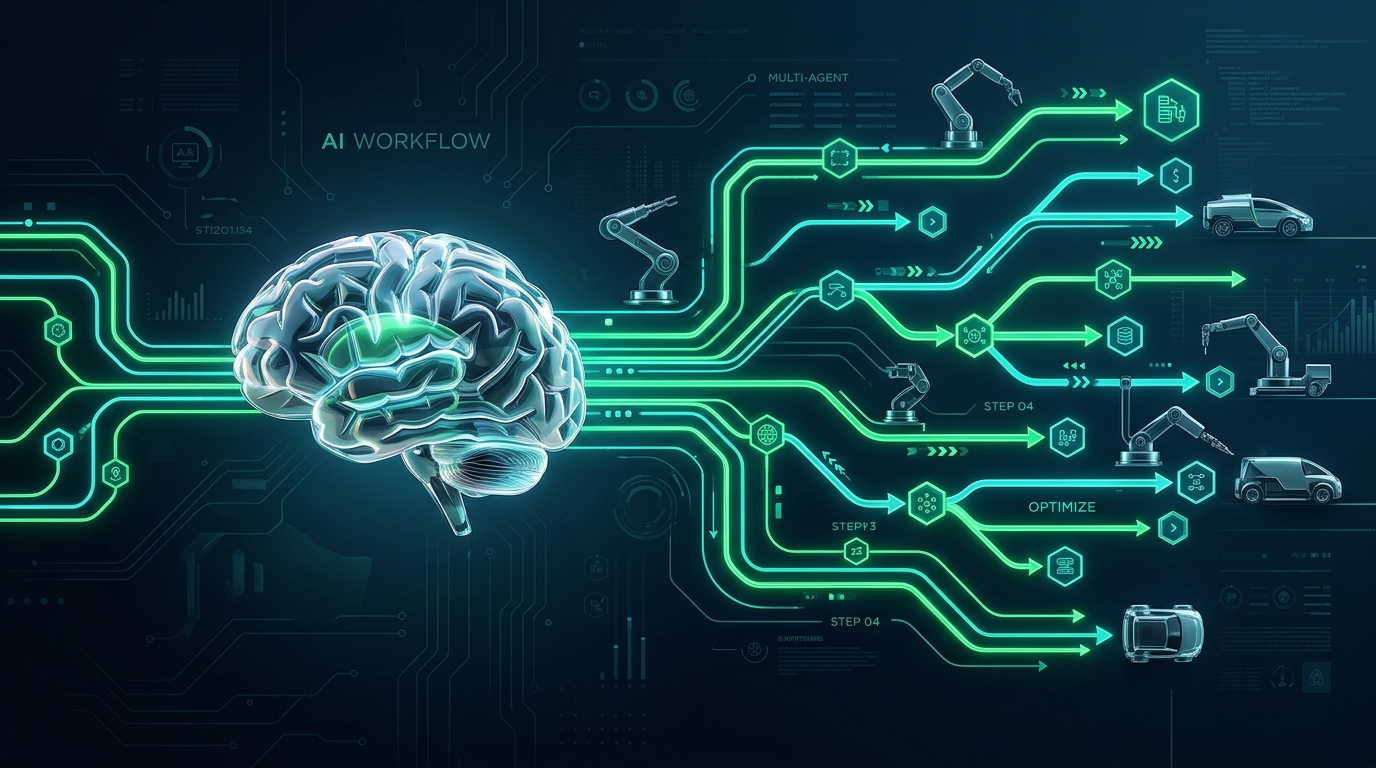 Agentic AI Workflows
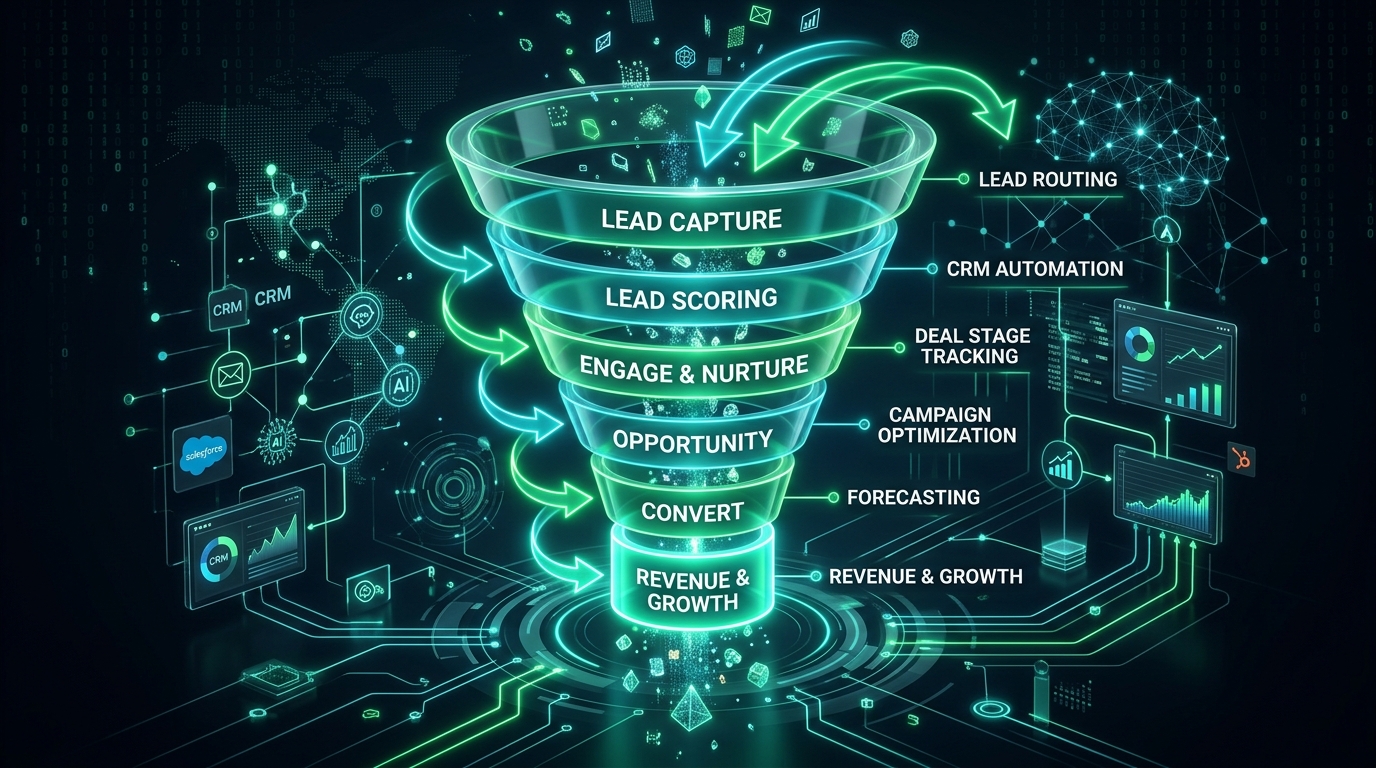 Revenue Operations Automation
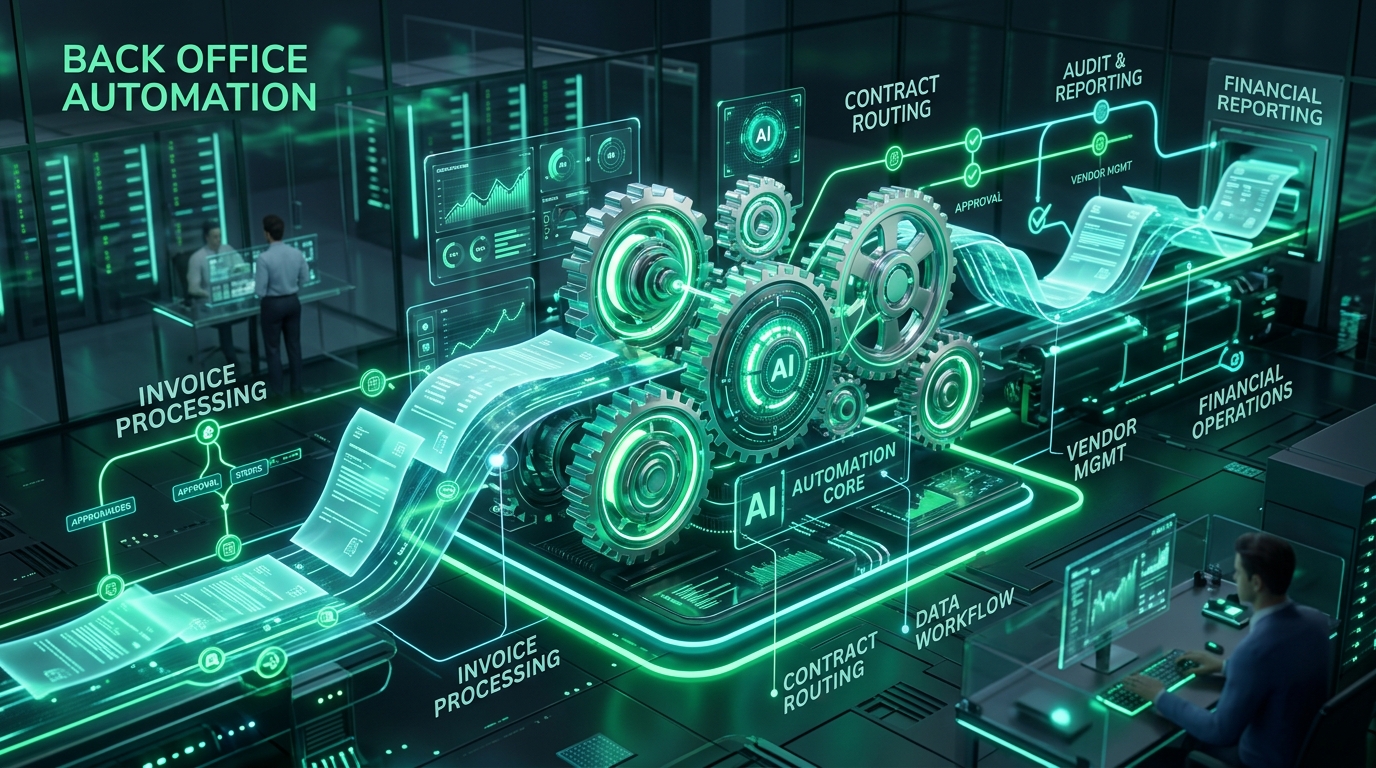 Back-Office & Operations Automation