The Complete CRM Automation Guide for B2B Teams in 2025
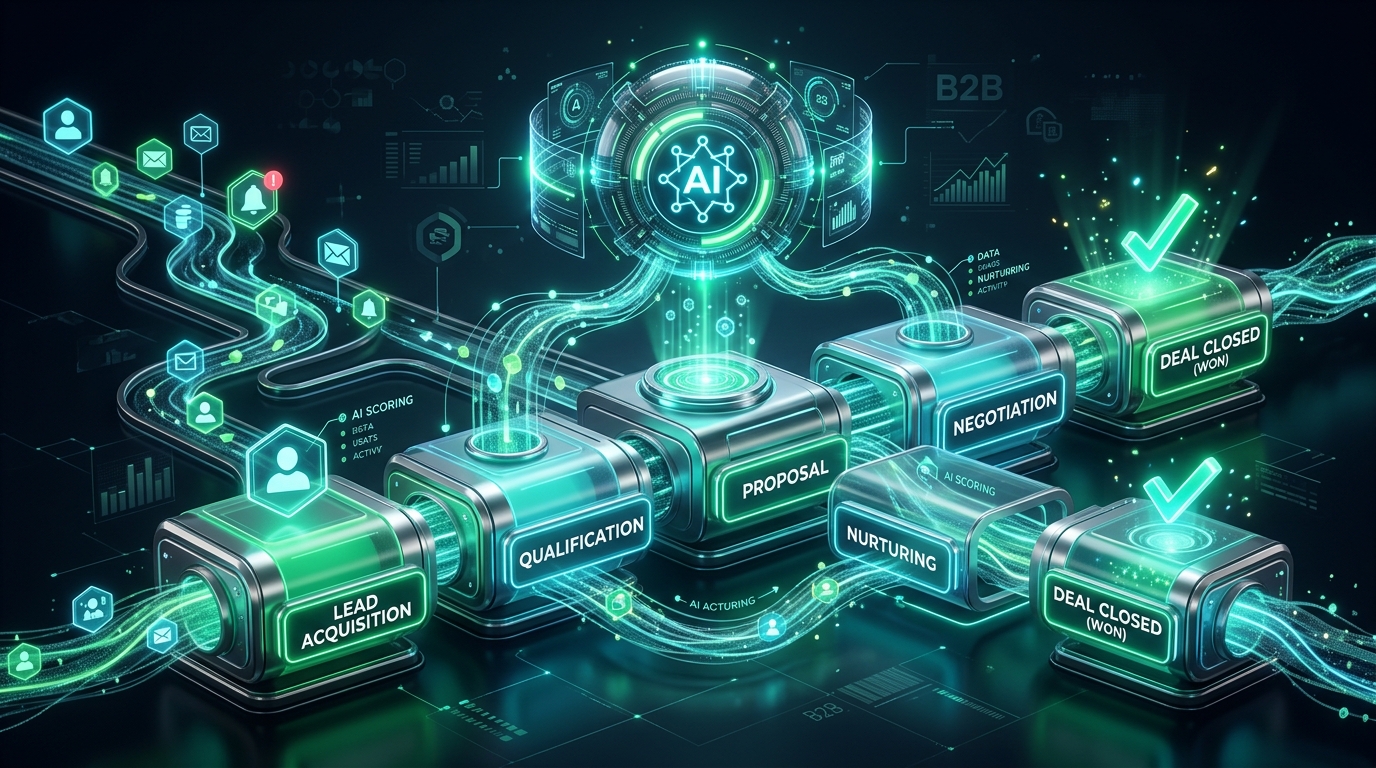
What Most B2B Companies Get Wrong About CRM Automation
When RevOps teams first tackle CRM automation, they usually start with lead routing — and stop there. A few round-robin rules, a basic lead scoring model, and maybe some email sequences. That's table stakes in 2025.
The companies pulling away from their competitors are automating the full revenue lifecycle: from the first touch through closed-won handoff, including everything that happens inside the CRM between those two points.
The Six Layers of Modern CRM Automation
1. Intelligent Lead Capture and Enrichment
The moment a lead enters your CRM, it should be automatically enriched with company data (firmographics, tech stack, funding), contact data (title, LinkedIn, direct dial), and intent signals (job postings, news, product category searches). Tools like Clay, Apollo, and ZoomInfo handle this — but they need to be wired into your CRM automatically.
2. Predictive Lead Scoring
Forget static lead scoring models with arbitrary point values. Modern lead scoring uses machine learning to identify the signals that actually predict conversion in your specific pipeline — not generic ICP proxies. This requires historical closed-won/lost data and periodic retraining.
3. Instant, Intelligent Lead Routing
Routing rules should account for more than territory and round-robin fairness. They should factor in rep capacity, specialization match, relationship history, and time-zone availability. The goal: the right lead reaches the right rep within 5 minutes of entering the system.
4. Automated Pipeline Hygiene
Deals sitting without activity for 14 days should trigger automated nudges. Opportunities with close dates in the past should be flagged for review. Contacts with no associated company should be automatically linked. Most CRMs support this natively — few teams configure it.
5. AI-Drafted Follow-Up Sequences
This is where 2025 is genuinely different from 2023. AI agents can now draft personalized follow-up emails based on call notes, deal context, and contact profile — reducing the time a rep spends writing follow-up from 15 minutes to a 30-second review and click. We build these as CRM-native integrations.
6. Closed-Won Handoff to CS
The moment a deal closes, a sequence of events should fire automatically: CS team notified with full deal context, onboarding kickoff scheduled, client account created in billing system, welcome email sent to the new client. Manual handoffs introduce delays and information loss.
Implementation Priority
Start with #3 (lead routing) and #6 (closed-won handoff) — they have the clearest ROI and the lowest complexity. Then move to #4 (pipeline hygiene) and #1 (lead enrichment). Leave #2 and #5 for when you have enough data and budget for the AI-powered layers.
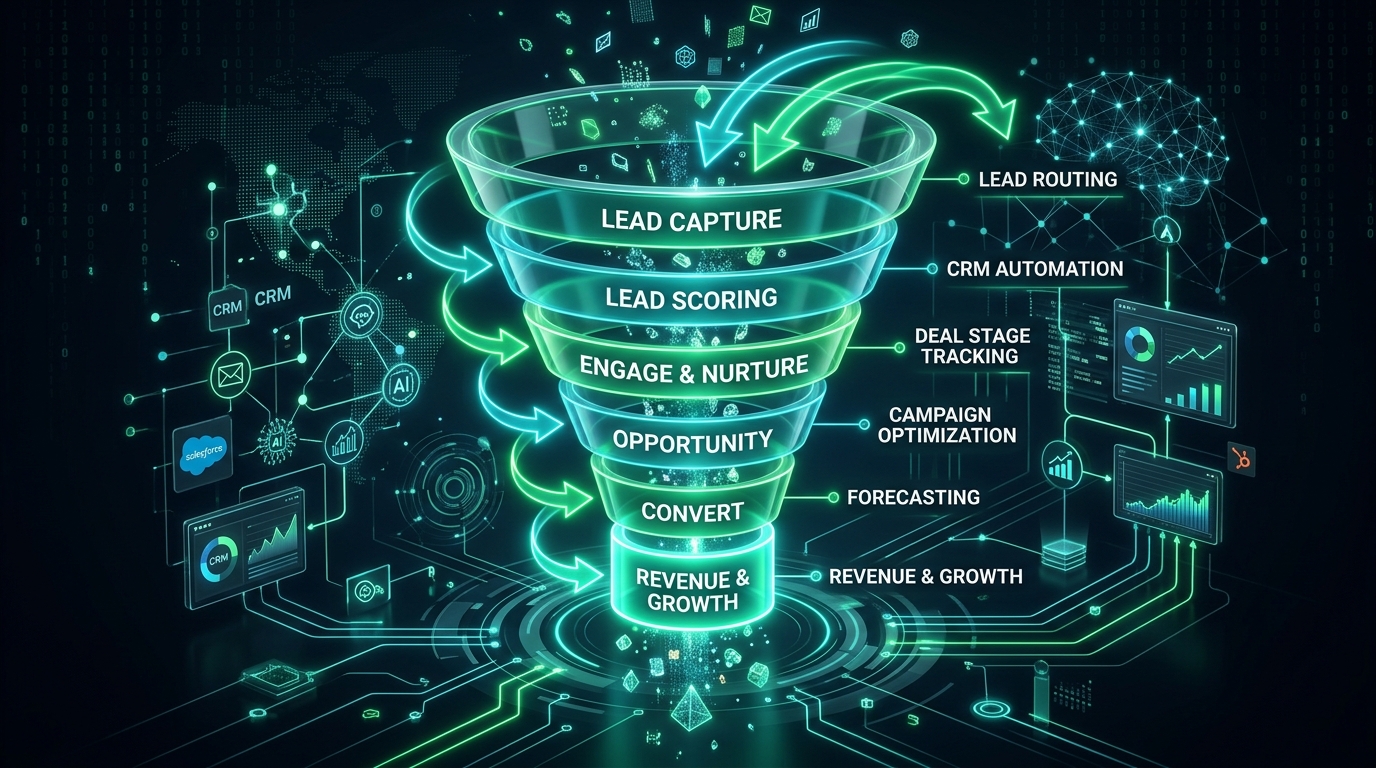 Revenue Operations Automation
 Back-Office & Operations Automation
 AI Customer Service Automation